
Little ones start to talk, and families closely watch their progress. First words bring excitement, and short phrases feel like big milestones. However, not every child develops at the same pace. Some take longer to find their voice, and delays can be part of the journey.
Speech delays occur when a child struggles to form sounds correctly, while language delays involve difficulty understanding or using words. Though often confused, each affects communication in different ways.
Recognizing the difference can help parents notice early signs. When communication becomes a challenge, working with a therapist from Bright Speech can provide clarity and structured support.
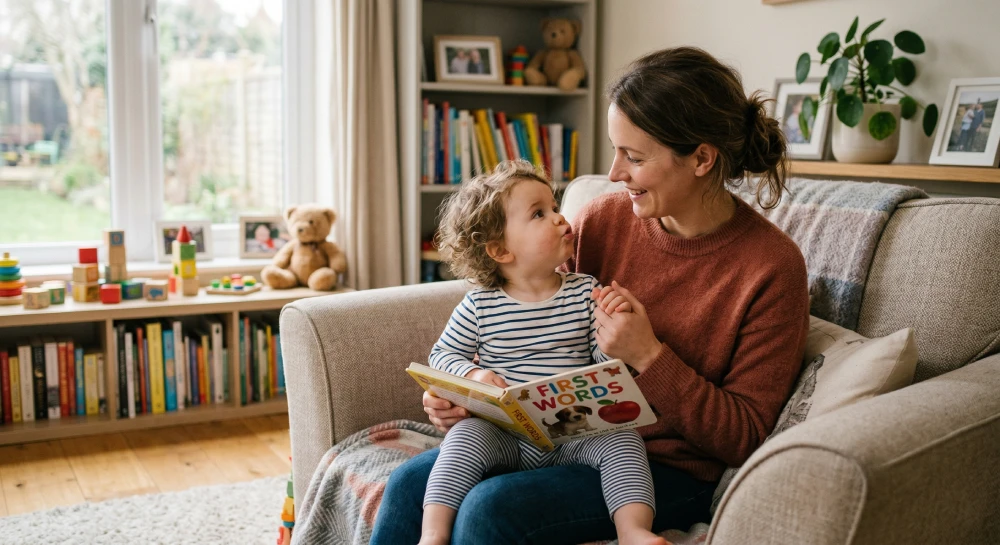
Speech involves how we produce sounds using our lips, tongue, and voice box. Proper coordination of these parts affects how clearly words are spoken.
Language, on the other hand, is about forming and understanding words, sentences, and meaning. It allows people to express thoughts, emotions, and ideas effectively.
Although speech and language work closely together, they develop differently. A child may struggle in one area while progressing normally in another.
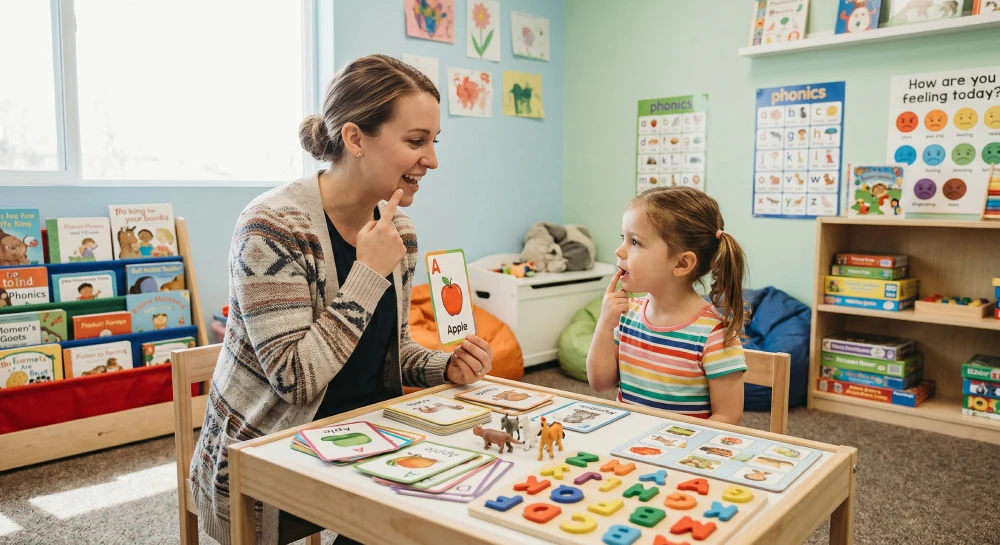
Speech delay happens when a child has difficulty producing sounds clearly or being understood by others. Some children understand language well but struggle with pronunciation.
For example, a child might say “wabbit” instead of “rabbit.” Speech therapy can help improve clarity through guided exercises and consistent practice.
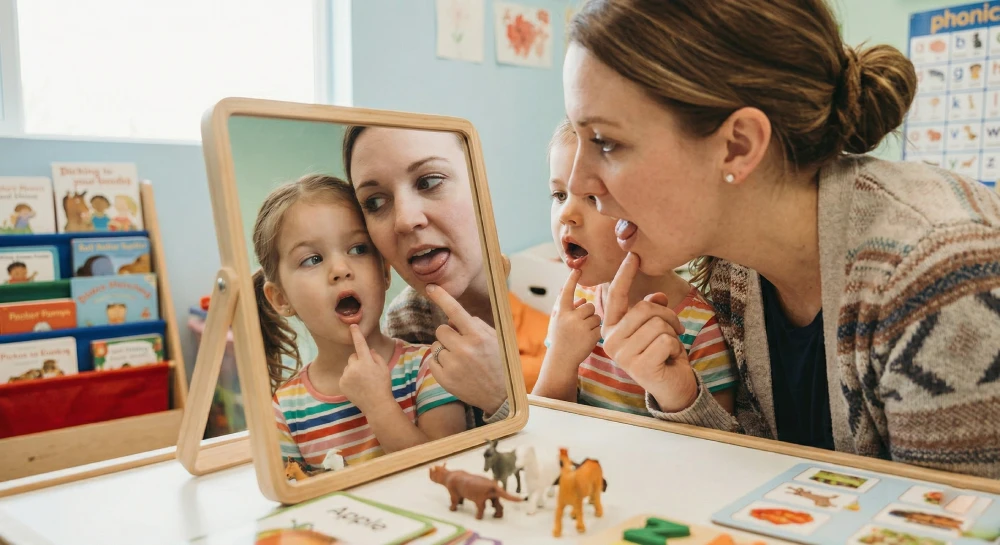
Language delay occurs when a child struggles to understand or use words to communicate effectively. The issue lies more in meaning and sentence formation than sound production.
Children may rely more on gestures like pointing instead of using words. With support and practice, language skills can gradually improve.
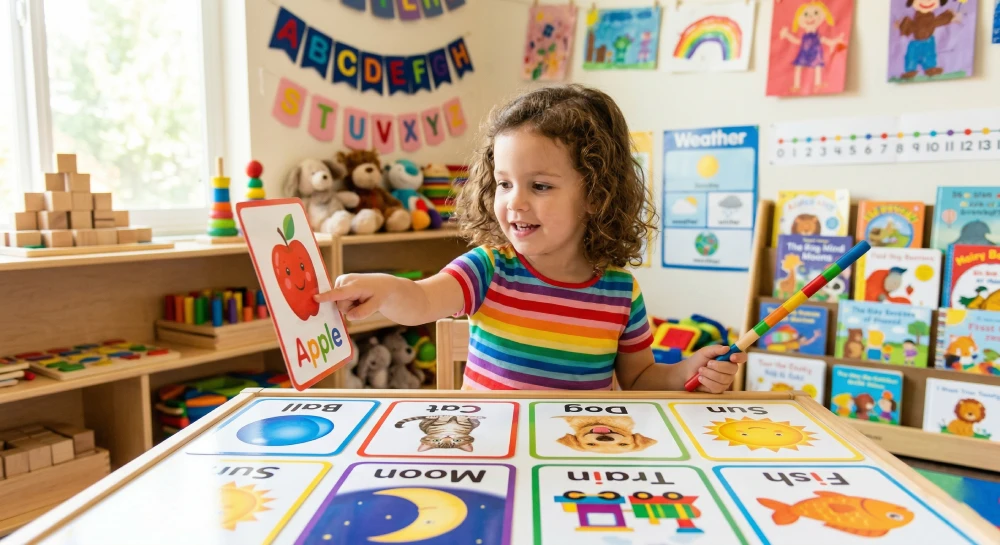
| Speech Delay | Language Delay |
|---|---|
| Difficulty producing sounds | Difficulty understanding or using language |
| Speech may sound unclear | Limited vocabulary |
| Child understands language | Child may struggle to understand instructions |
| Focus on pronunciation | Focus on communication and comprehension |
Delays can happen for different reasons, and sometimes the cause isn’t clear.
Early childhood is a crucial time for communication development. With timely support, children can build strong speech and language skills.
Speech therapy uses structured and engaging methods to improve communication skills.
These activities make learning enjoyable while helping children develop their speaking abilities.
Parents play an important role in supporting communication development.

Consider consulting a specialist if you notice ongoing challenges in communication.
Every child develops at their own pace, but ongoing difficulties with speech or language may need attention. Understanding the difference between the two helps parents take the right steps early.
With the right support from professionals and consistent encouragement at home, children can build strong communication skills and confidence for the future.
Speech delay affects how a child produces sounds and pronounces words, while language delay affects how a child understands and uses words to communicate ideas.
Common signs include unclear speech, difficulty pronouncing sounds, dropping parts of words, and being hard to understand compared to other children of the same age.
Children may have limited vocabulary, struggle to form sentences, have trouble following instructions, or rely more on gestures than words to communicate.
By age two, most children start using simple words and short phrases. By age three, their speech should be more understandable, though some sounds may still develop over time.