
Babies begin making sounds long before they form words. What starts as babbling slowly turns into sentences over time. As kids talk more, their minds grow better at sharing ideas. Listening helps just as much as speaking when learning to connect with people around them. Words slowly become tools for building relationships every day.
Still, some children face challenges when learning to talk or understand language. Forming clear words can be difficult, and expressing full thoughts may take extra effort. Following instructions might also be challenging, which makes conversations harder. When communication becomes difficult, making friends can feel stressful, confidence may drop, and school progress can slow down.
Speech therapy helps children overcome communication challenges early in life. Clinics like Bright Speech provide specialized guidance with personalized therapy plans designed to help children express their thoughts clearly. Each session progresses at the child’s pace, focusing on individual needs.
A child’s ability to communicate often improves when support begins early. Some children show signs of speech difficulty even before preschool. Limited vocabulary, difficulty forming sentences, or frustration while speaking can indicate the need for support. Speech therapy often combines playful learning with targeted exercises that strengthen communication skills over time.

Speech and language are closely connected but represent different parts of communication. Speech focuses on producing sounds clearly, while language involves understanding words, grammar, and sentence structure.
Clear speech depends on how well the mouth, tongue, and other muscles work together. Proper timing and coordination help produce sounds that others can understand. Language, on the other hand, involves learning vocabulary, forming sentences, and understanding how words connect to express ideas.
Babies begin with simple sounds and babbling before developing real words. Gradually, they learn to combine those words into phrases and sentences. Everyday interactions help children build these skills naturally.
If a child’s speech or language development progresses slower than expected, speech therapy can help guide that development.
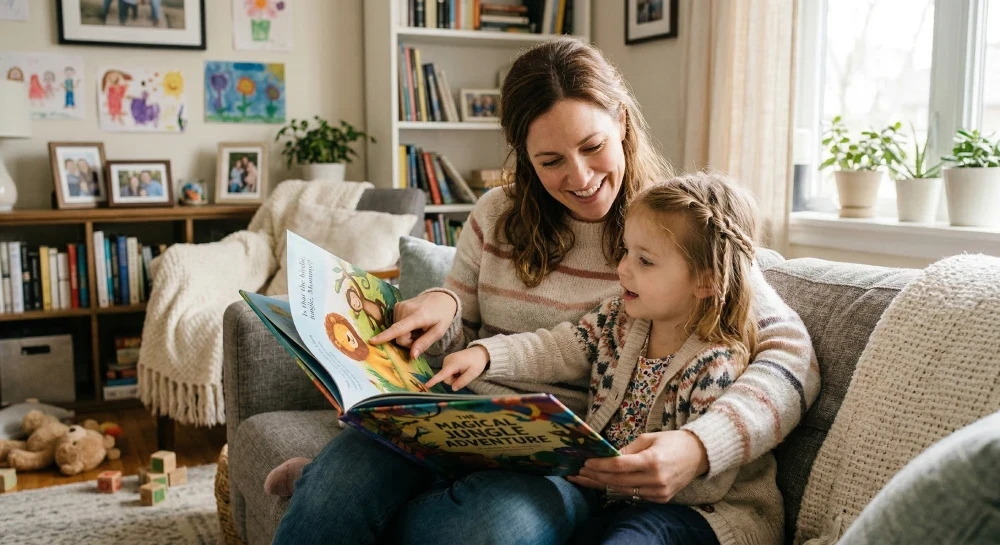
Speech-language pathologists often work with children who experience different types of communication challenges.
Some common issues include:
Some children struggle to pronounce certain sounds clearly. Words may sound distorted or unclear, making it difficult for others to understand them.
Language disorders can affect how children understand words or express their thoughts. Some children may have trouble finding the right words, while others may struggle to understand spoken language.
Social communication involves using language effectively during social interactions. Children may have difficulty with:
Fluency disorders affect the smooth flow of speech. Stuttering is a common example where sounds may be repeated, stretched, or interrupted with pauses.
Speech therapists evaluate how children communicate and develop treatment plans based on individual needs.

Speech and language skills develop rapidly during early childhood. Identifying communication difficulties early allows children to receive support during a critical learning period.
Early intervention can help children:
Children who receive early speech therapy often find it easier to express their thoughts and interact with others as they grow.
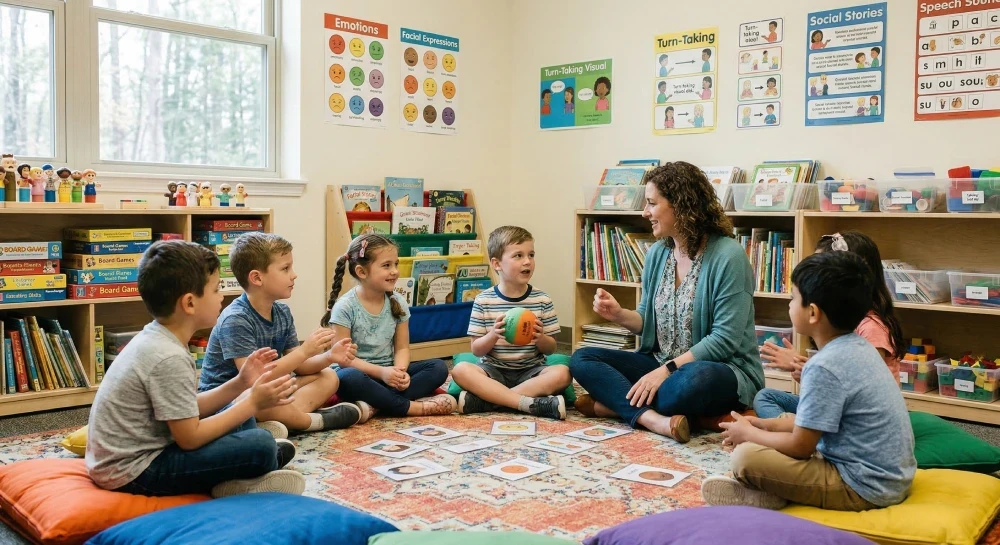
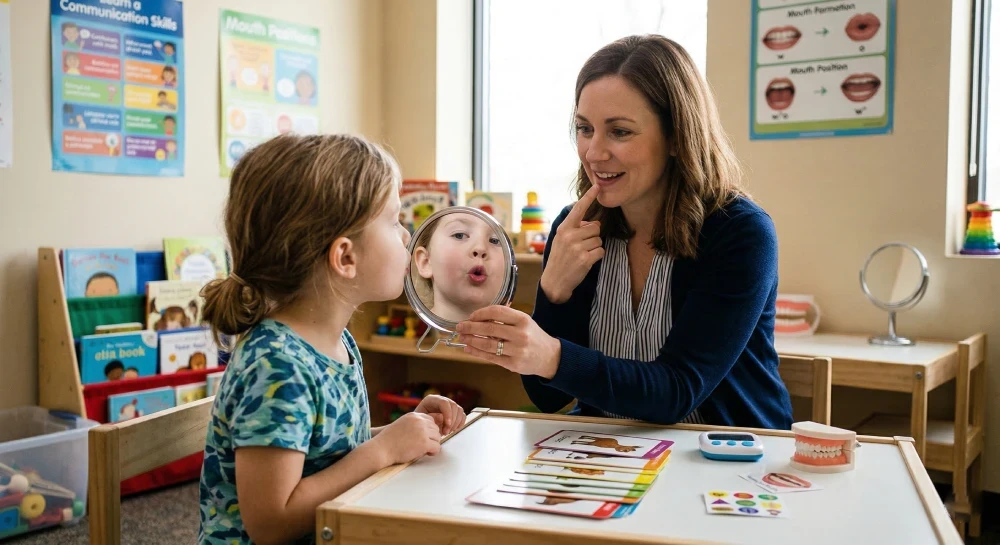
Speech therapy provides structured support that helps children improve how they speak, listen, and understand language. The process usually begins with a detailed evaluation performed by a speech-language pathologist.
The therapist observes the child’s communication skills and identifies areas that need improvement. Based on this evaluation, a customized therapy plan is created to support the child’s development.
Many therapy sessions are conducted individually so the therapist can focus on the child’s specific communication challenges.
During sessions, therapists often use engaging activities such as:
These playful activities encourage children to practice speaking while keeping the learning environment comfortable and engaging.
Parents play a vital role in supporting their child’s communication development. Many speech therapy programs include parent coaching to teach families strategies that can be used at home.
Therapists may guide parents on how to:
When parents actively support therapy techniques at home, children often make faster progress.
Some children benefit from group sessions where they can practice communication with peers in a supportive environment.
These sessions help children learn how to:
Group therapy helps children practice real-life communication skills while interacting with others their age.
Communication challenges can sometimes affect a child’s emotional well-being. Children may feel frustrated or lose confidence when they struggle to express themselves.
Therapy can provide emotional support that helps children manage these feelings while improving their communication skills. Families may also receive guidance to support their child’s emotional growth.
Every child develops communication skills at their own pace. However, certain signs may suggest that speech therapy could be helpful.
Some signs include:
If parents notice these signs, consulting a speech-language professional can help determine whether therapy is needed.
Speech therapy provides many long-term benefits that support a child’s development.
Children gradually develop clearer speech and stronger language abilities, making it easier to express their thoughts.
Improved communication allows children to participate more confidently in conversations and build friendships.
As children gain better communication skills, their confidence grows in social and academic settings.
Strong language skills help children perform better in school by improving reading, writing, and classroom participation.
Parents can support their child’s communication development through everyday activities at home.
Helpful strategies include:
These simple daily interactions create natural opportunities for children to practice speaking and listening.
Strong communication skills help children grow, learn, and build meaningful relationships. When speech or language difficulties appear, early support can make a significant difference.
Speech therapy provides personalized guidance that helps children develop clearer speech, better understanding, and stronger confidence when communicating.
With the support of trained therapists and encouragement from family members, children can steadily build the skills they need to express themselves and connect with the world around them.
Speech therapy is a specialized treatment that helps children improve their ability to speak, understand language, and communicate effectively. Speech-language pathologists work with children using interactive activities, exercises, and techniques to strengthen communication skills.
Speech therapy helps children develop clearer pronunciation, expand vocabulary, understand language better, and express their thoughts more effectively. Therapy also improves listening skills and social communication abilities.
Speech therapy can begin as early as infancy if communication delays are identified. Early intervention is often recommended because young children learn language skills more quickly during early developmental stages.
The duration of speech therapy varies depending on the child’s needs, the type of speech or language challenge, and how consistently therapy is practiced. Some children improve within a few months, while others may need longer-term support.