
What stands out most in the early years of childhood? A toddler finding their voice. Most parents listen closely for the moment when tiny lips shape real words. Slowly, sounds turn into phrases, and short expressions grow into longer thoughts.
Some children simply take more time to start talking. When words appear later than expected, parents may begin wondering whether something might be wrong.
Children who learn to speak later than typical milestones are often called late talkers. While some toddlers catch up naturally, many benefit from extra guidance and practice early on.
Speech therapy programs at centers like Bright Speech help children develop communication skills through sessions tailored to each child's needs. Early support can make it easier for toddlers to express their thoughts and build confidence while speaking.

This article explores why some toddlers speak later than others. Parents often notice differences early. Several factors may influence speech development, including hearing ability, family history, and daily language exposure.
Simple everyday interactions also play an important role. Talking during daily routines, reading together, and encouraging conversation can support a child's language development.
Each child develops at their own pace, but monitoring progress over time can help parents understand whether additional guidance may be helpful.
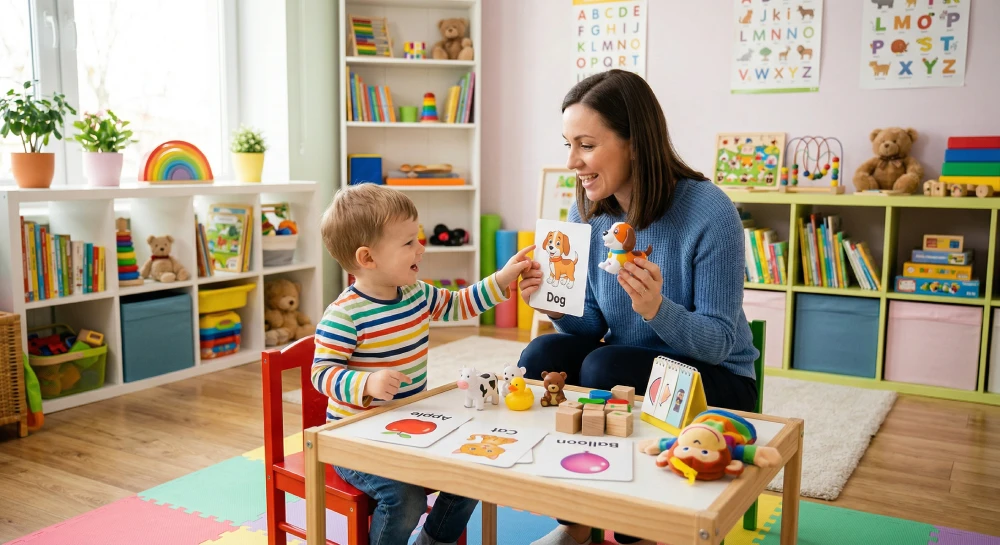
A toddler who talks later than usual typically falls between the ages of 18 months and 2½ years and uses fewer words than most children their age.
While many toddlers start speaking simple words around their first birthday, by age two many children can combine words into short phrases.
Late talkers may show behaviors such as:

Parents often notice early signs when a toddler’s speech development differs from others their age.
A child may say very few words by the age of 18 to 24 months.
Many toddlers begin combining words like “more juice” or “mommy come.” Some late talkers may continue using only single words.
Children may rely on pointing, nodding, or making sounds instead of speaking clearly.
Toddlers may become frustrated when they cannot clearly express their needs or thoughts.
Most children learn language by copying sounds they hear. Late talkers may struggle to imitate words or phrases.
Recognizing these clues early can help parents determine whether professional guidance may be helpful.
Speech delays can occur for several different reasons. In some cases, the cause may not be immediately clear.
Some common factors include:
Children who cannot hear sounds clearly may find it harder to learn how to pronounce words.
Children grow and develop at different speeds, including speech and language skills.
Frequent conversations with caregivers help toddlers learn new words. Limited interaction may slow language development.
Difficulties with the muscles involved in speech may affect how sounds are produced.
Speech and language delays sometimes occur across generations within families.
Speech-language specialists can evaluate a child’s development and identify underlying causes.

While children develop at their own pace, certain signs may suggest it is time to consult a specialist.
Early evaluation can help determine whether speech therapy may benefit the child.
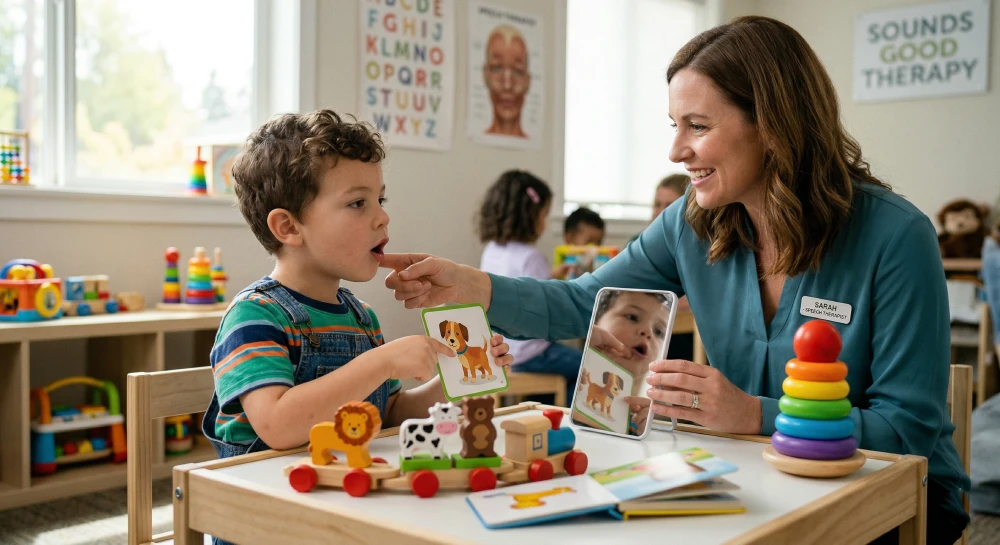
Speech therapy often uses play-based activities that feel natural and enjoyable for toddlers. Instead of structured drills, therapists use games and interaction to encourage communication.
Speech-language pathologists may use activities such as:
Because therapy sessions are designed around play and exploration, many toddlers participate comfortably and enjoy learning.
Early childhood is a crucial time for language development. From birth, children absorb sounds and words from their surroundings.
Early intervention can help toddlers:
When children receive support early, they often gain confidence and communicate more effectively over time.
Parents play an important role in supporting speech development. Everyday conversations and shared activities help children learn language naturally.
Describe everyday actions such as preparing meals, getting dressed, or cleaning up. Hearing these words regularly helps toddlers connect language with daily experiences.
Reading introduces new vocabulary and encourages conversation about pictures and stories.
Speak slowly and clearly so children can try repeating words.
Questions that encourage longer answers help children practice expressing ideas.
Real conversations are more effective for language development than passive screen viewing.
Some children feel shy or frustrated when they struggle to express themselves. Positive encouragement can make a big difference.
Parents can support speech development by:
When children feel encouraged, they are more likely to keep practicing their speech skills.
Speaking later than expected does not mean a child will struggle forever. With supportive guidance and early help, many toddlers develop strong communication skills.
Parents who notice speech delays can encourage language development through everyday conversations, reading together, and seeking professional guidance when needed.
Early support often helps children gain confidence, strengthen speech abilities, and connect with others more easily as they grow.
A late talking toddler is usually a child between 18 months and 30 months who uses fewer spoken words than most children their age. These children may understand language well but have difficulty expressing themselves verbally.
Some early signs include a very limited vocabulary after 18 months, difficulty combining two words by age two, heavy reliance on gestures instead of speech, frustration when trying to communicate, and difficulty imitating sounds or words.
Speech delay can happen for several reasons, including hearing problems, developmental differences, limited language exposure, oral-motor challenges affecting speech muscles, or a family history of speech and language delays.
Parents may consider seeking professional guidance if a child is not using words by 18 months, has fewer than 50 words by age two, struggles to imitate sounds, or has difficulty understanding simple instructions.